The purchase price answers what the seller wants for the machine. It does not answer what the machine will cost your business over the period you own it. A useful comparison accounts for preparation, operation, repairs, financing costs where relevant, and what you expect to recover when you sell.
The worksheet below is a simple, undiscounted cash-cost model for comparing candidates. It is not a tax calculation, valuation or prediction of market prices. Use a common ownership period and scope, then replace every illustrative input with evidence from your own situation.
In This Guide
- Choose the Period and the Cost Basis
- Use a Consistent Formula
- Worked Example With Invented Planning Inputs
- Test the Assumptions That Could Change the Decision
- Separate a Cash Reserve From Expected Expenses
- Account for Downtime Without Double Counting
- Compare Buying With a Rental or Subcontract Offer
- Keep an Evidence Column and Update It
- Questions Buyers Often Ask
Choose the Period and the Cost Basis
Decide how long you expect to own the machine and how many productive machine hours you expect during that period. Separate a realistic workload from the maximum work you hope to win. Use the same definition of an hour for every candidate.
Iowa State University Extension distinguishes ownership costs from operating costs in its machinery-cost framework. Its publication concerns farm machinery; the useful general principle here is to separate costs that persist with ownership from costs that change with use. Do not import its tractor repair or fuel assumptions into a construction machine. Iowa State University Extension: Estimating Farm Machinery Costs (March 2026).
For this worksheet, record cash outlays for the machine and its operation, subtract expected net resale, and keep operator labor outside the initial subtotal so it can be added explicitly. If you need economic-cost analysis, also assess the cost of tied-up capital and the timing of cash flows with a suitable adviser.
Use a Consistent Formula
Count the machine purchase once. If you already include its full price, do not also add loan principal repayments to this cost total. Include relevant interest and financing fees separately. A loan payment schedule is still needed to check whether your monthly cash flow can support the purchase.
Likewise, do not add depreciation to this particular formula: purchase less resale already represents the amount of capital not recovered at sale. Mixing two cost methods can count the same amount twice.
Worked Example With Invented Planning Inputs
Illustration only: the following figures are deliberately assumed for a hypothetical used machine held for three years and used for 1,200 productive hours. They are not quotes, typical costs or current market estimates. All amounts are U.S. dollars.
On smaller screens, scroll the table sideways to see every column.
| Item | Assumed Total | How to Replace the Assumption |
|---|---|---|
| Machine price | $35,000 | Written seller offer |
| Transaction charges and applicable taxes | $1,500 | Actual terms and applicable tax treatment |
| Delivery | $1,000 | Transport quotation |
| Initial service and preparation | $1,500 | Inspection-based quotation |
| Fuel | $6,000 | Expected use × supported consumption × fuel price |
| Planned maintenance after initial service | $4,200 | Model schedule and local service/parts prices |
| Repair expenditure allowance | $6,000 | Inspection findings, records and uncertainty scenarios |
| Insurance and storage | $3,600 | Actual insurance and storage costs |
| Financing interest and fees | $2,400 | Lender quotation or payment schedule |
| Less expected net resale | −$22,000 | Supported resale assumption after selling costs |
| Estimated ownership cash cost | $39,200 | Sum of the above |
| Cost per productive machine hour | $32.67 | 39,200 ÷ 1,200, rounded |
This subtotal excludes operator labor and business overhead beyond the items shown. Add them when comparing a fully operated rental or subcontract quotation. Also consider any applicable registration, permits, property taxes, attachment expenses, jobsite movement and other costs specific to the operation; an absent line in the illustration is not a reason to omit a real expense.
Test the Assumptions That Could Change the Decision
A single estimate hides uncertainty. Test separate scenarios so you can identify which assumption drives the result. In this illustration, a lower-use case has 900 productive hours, fuel reduced to $4,500 and planned maintenance reduced to $3,150; every other input stays the same. Actual maintenance may include calendar-based work, so scale only the costs that truly change with use.
On smaller screens, scroll the table sideways to see every column.
| Scenario | Total Cost | Productive Hours | Cost per Hour |
|---|---|---|---|
| Base assumptions | $39,200 | 1,200 | $32.67 |
| Lower use with the specified variable-cost changes | $36,650 | 900 | $40.72 |
| Net resale is $4,000 lower; other base inputs unchanged | $43,200 | 1,200 | $36.00 |
| Repairs are $4,000 higher; other base inputs unchanged | $43,200 | 1,200 | $36.00 |
These are independent scenarios, not a forecast or probabilities. If more than one adverse change matters to your business, build a combined case. The purpose is to decide what needs stronger evidence before you commit.
Separate a Cash Reserve From Expected Expenses
A reserve is money you keep available for uncertainty. It is not automatically a cost incurred during the ownership period. Do not add a reserve on top of an allowance for the same repair event and describe the result as precise expected expenditure.
Document known work separately from uncertain future repairs. Request itemized quotations for identified issues and record parts availability. For unresolved symptoms, price the next diagnostic step rather than guessing a complete repair bill.
Account for Downtime Without Double Counting
Choose how to model an interruption. You might include replacement rental and delivery as additional expenses, or reduce productive hours, or build a wider business-impact case. State the method. Do not automatically add the full lost revenue and the full cost of a replacement machine when the replacement would preserve that same revenue.
Ask what happens if the machine is unavailable during your busiest period. A useful ownership plan includes service access and a realistic backup option, even when the base spreadsheet cannot predict the exact date of a failure.
Compare Buying With a Rental or Subcontract Offer
Match the scope before comparing totals: period, hours, attachment package, delivery, fuel, operator, maintenance responsibilities and downtime arrangements. A bare rental rate and a fully operated subcontract quote answer different questions.
Keep a separate month-by-month cash plan for the deposit or purchase, finance payments and irregular repair bills. A favorable cost per hour does not guarantee that the business has cash available when a payment is due.
Keep an Evidence Column and Update It
- Label each input as quoted, historical, estimated or unresolved.
- Save the date and source of each quotation.
- Record exactly what the price includes and excludes.
- Replace estimates with actual invoices during ownership.
- Revisit the model when the workload or planned sale date changes.
Use the result as a comparison tool and a list of questions. If a candidate looks attractive only with high utilization, minimal repairs and strong resale, investigate those assumptions before allowing the spreadsheet to decide the purchase.
Watch the Topic in Context
Construction Equipment Financing: What You Need to Know
Financing is only one part of total ownership cost, but loan structure, term and fees can materially change the real cost of a purchase. Use this overview to understand the financing side, then combine it with repair, transport, maintenance and downtime costs.
Joe Camberato · YouTubeShow VideoHide Video
External educational video. No autoplay. Financing terms vary by lender and borrower; compare current written offers.
Questions Buyers Often Ask
Should I add a contingency reserve as an expense?
Show cash held for uncertainty separately from expected expenses. Include actual or budgeted repairs consistently, so reserving the money and later spending it do not count the same cost twice.
Why does lower utilization increase cost per hour?
Ownership costs that do not fall with use are spread over fewer productive hours. Recalculate both hours and any expenses that genuinely change; do not simply reuse the optimistic workload estimate.
Can I add loan payments to a budget that already includes the purchase price?
Check the accounting basis first. Counting the acquisition price and repayment of the same principal would duplicate that amount. Distinguish financing costs from principal and use a separate cash-flow schedule when needed.
Sources and Scope · Research checked September 18, 2026. U.S.-first buyer education. This is an editorial research guide, not a report on a machine we inspected. Equipment-specific procedures and limits belong in the correct manufacturer manual.
See our Editorial Policy and send a correction.
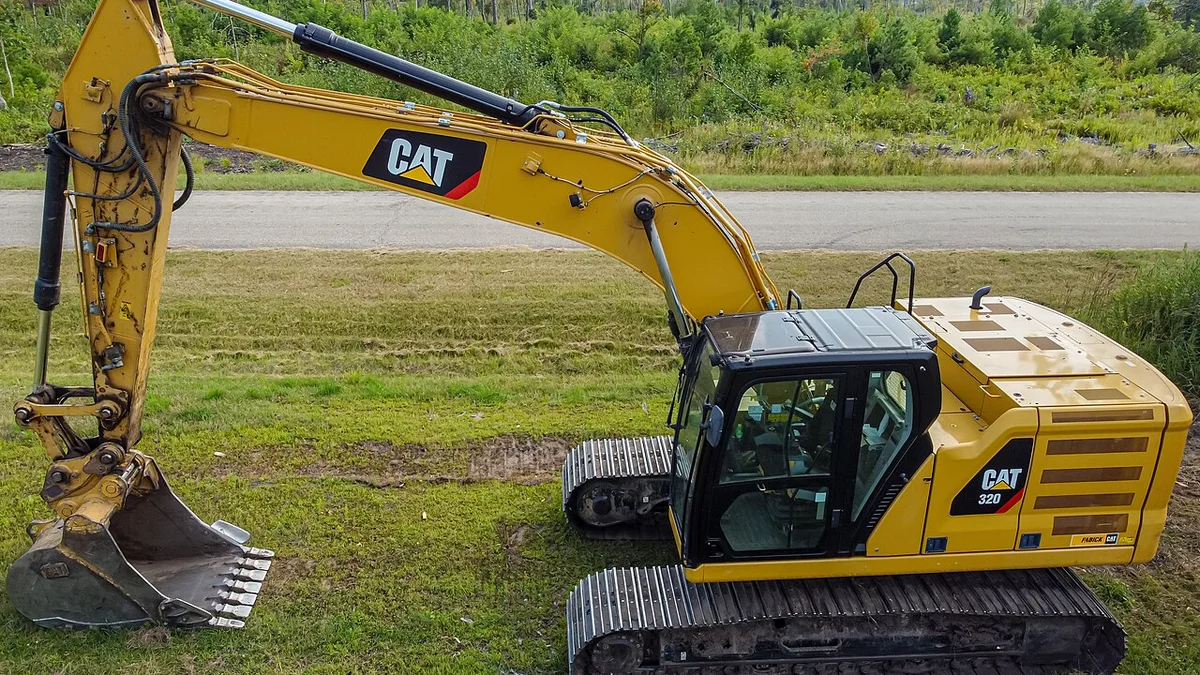
Featured photograph: Photo by Jeffwalters · Wikimedia Commons · CC0 1.0. Cropped and resized to 1200 × 675; converted to WebP.