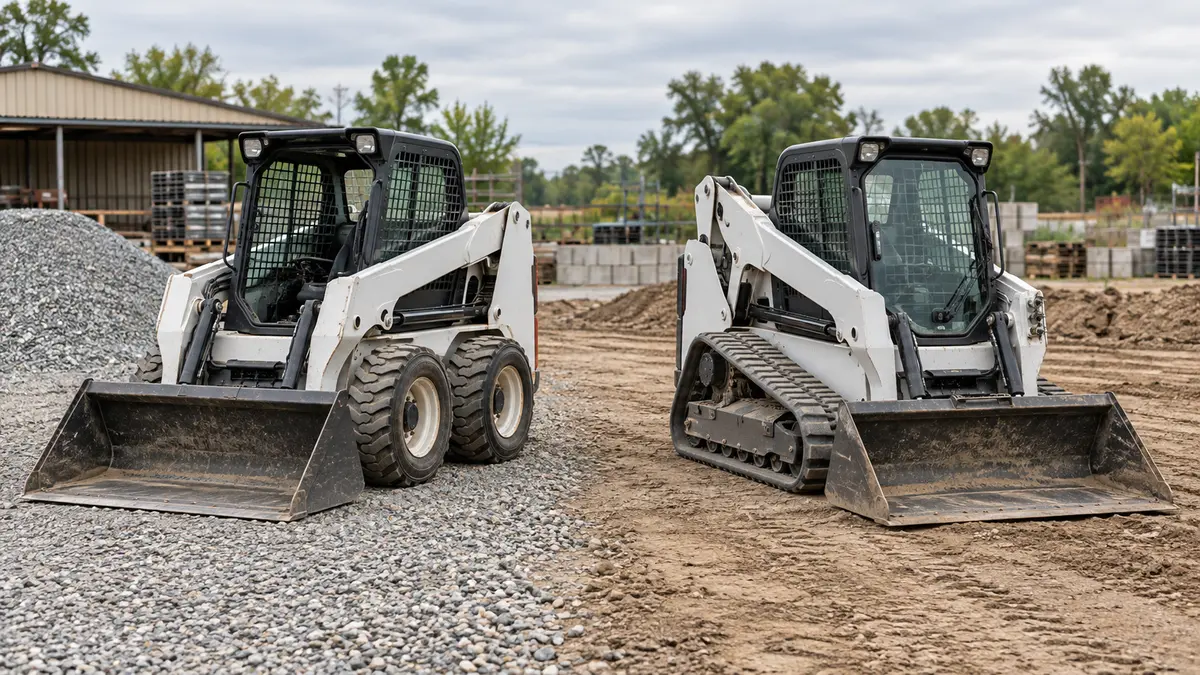
Choose between a wheeled skid steer and a compact track loader by looking at the work your machine will do most often. A good example of the wrong machine type can still be an expensive purchase.
The practical decision has two stages: choose a type that suits the workload, then compare the condition and total cost of individual machines within that shortlist. This keeps enthusiasm for a particular used listing from determining the specification.
In This Guide
Start With the Surfaces Where You Work
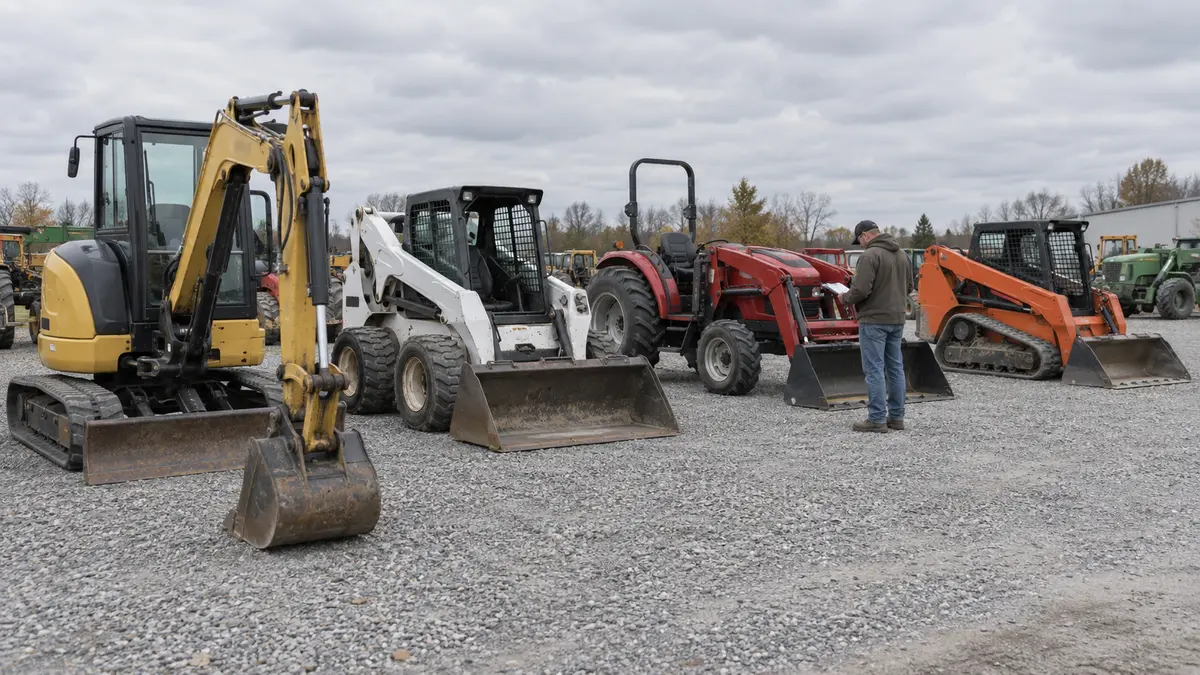
Bobcat describes skid steers as useful on hard surfaces and compact track loaders as suited to softer ground, where their tracks provide a different contact pattern and traction characteristics. That gives buyers a starting point, not a promise that one type works safely on every site. Bobcat: Compact Loader Types and Applications.
List your recent or expected jobs and note the surface, access and weather interruptions. Separate permanent conditions from occasional exceptions. If nearly all your work happens on one surface, give it more weight than an imagined future contract.
| Your Work | Wheeled Skid Steer Questions | Compact Track Loader Questions |
|---|---|---|
| Developed sites and hard surfaces | Do tires suit the work and travel pattern? | What track wear and turning demands should be assessed? |
| Soft or sensitive ground | Will access and traction meet the job requirements? | Does the specific track setup fit the conditions? |
| Mixed sites | Which jobs dominate the workload? | What additional ownership cost is justified by the work? |
| Frequent transport | What is the actual loaded package? | Does the complete package fit the transport arrangement? |
| Specialist attachments | Is the installed configuration compatible? | Is the installed configuration compatible? |
Do not infer slope safety or a lifting limit from the presence of tracks. Use the specific operator’s manual, applicable ratings and a competent site assessment for those questions.
Compare Working Packages, Not Similar Model Numbers
Write a common specification for the loads, tools and dimensions you need. Then ask suppliers to identify machines that meet it. A skid steer and track loader with similar horsepower or a similar-looking body may have different ratings, weights and installed options.
Get attachment compatibility confirmed with the exact machine and tool identifiers. Keep installation costs in the comparison. A tool already owned by your business is not automatically compatible with every candidate; neither is a tool included by the seller.
Make Running-Gear Condition Visible in the Price
Ask for a separate condition assessment and repair quotation for the running gear on each candidate. For a wheeled machine, itemize the tires and wheels. For a track loader, have the professional identify the scope of any recommended undercarriage work rather than pricing only a visible track replacement.
A seller’s remaining-life percentage may be an estimate with no common method behind it. Ask what it describes, how it was assessed and what evidence supports it. Use photographs, professional findings and quotations to make the budget understandable.
Do not assume that a new visible component means related parts need no attention. Ask the inspector which items were renewed, which remain in service and how the proposed work was scoped. That is a better comparison than counting how many listings advertise “new tracks” or “good tires.”
Price the Work You Actually Expect
Build the same ownership period and workload assumption for both candidates. Include acquisition, initial work, operating costs, movement between sites and expected resale. Record every uncertain estimate so you can see whether the decision depends on an optimistic assumption.
Avoid an unsupported universal claim that tracks cost a fixed amount more per hour. Ask your service provider for model-specific work prices, use your own past records where available, and label estimates as estimates. The total-cost worksheet shows how to structure the calculation.
Consider Renting the Less Frequent Capability
If a particular machine type is needed only for a small share of the workload, compare owning it with renting for those jobs. Ask about local availability and delivery timing, not just the headline rental rate. A low rental quotation is less helpful if the machine is unavailable when the contract starts.
This is a planning choice, not a recommendation to rent or buy in every case. Use the same scope on both sides: attachments, delivery, operating labor, fuel, responsibilities and downtime arrangements. Write down what would cause you to reconsider as the job mix changes.
Inspect the Individual Machine After Choosing the Type
Once the type fits, the particular used machine still needs records, inspection and clear sale terms. A well-documented wheeled loader should not be rejected solely because another listing has tracks; a damaged track loader should not win solely because your next job includes soft ground.
- Confirm the intended jobs and configuration.
- Review service history and unresolved faults.
- Commission a suitable independent inspection.
- Obtain quotations for identified work and transport.
- Compare the complete written offers under the same assumptions.
Keep your choice in a short decision note: why the type fits, which individual machine you prefer, and the evidence still needed. This makes it easier to resist a last-minute discount on equipment that does not solve the original job.
Sources and Scope · Research checked September 18, 2026. U.S.-first buyer education. This is an editorial research guide, not a report on a machine we inspected. Equipment-specific procedures and limits belong in the correct manufacturer manual.
See our Editorial Policy and send a correction.