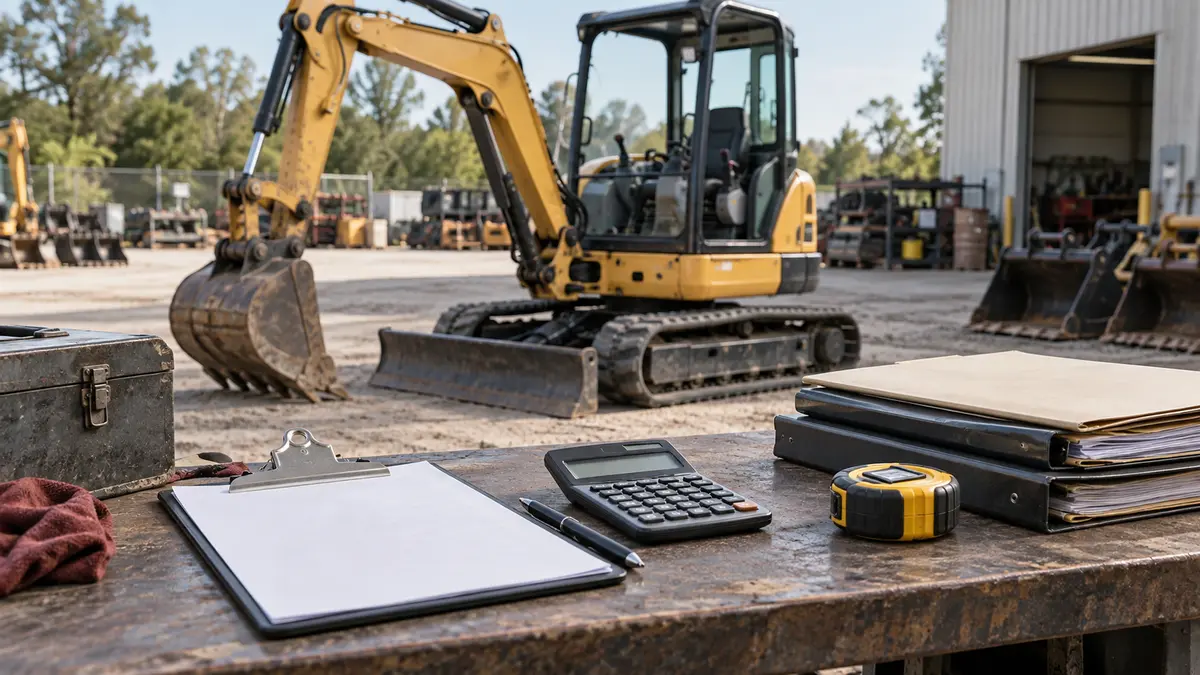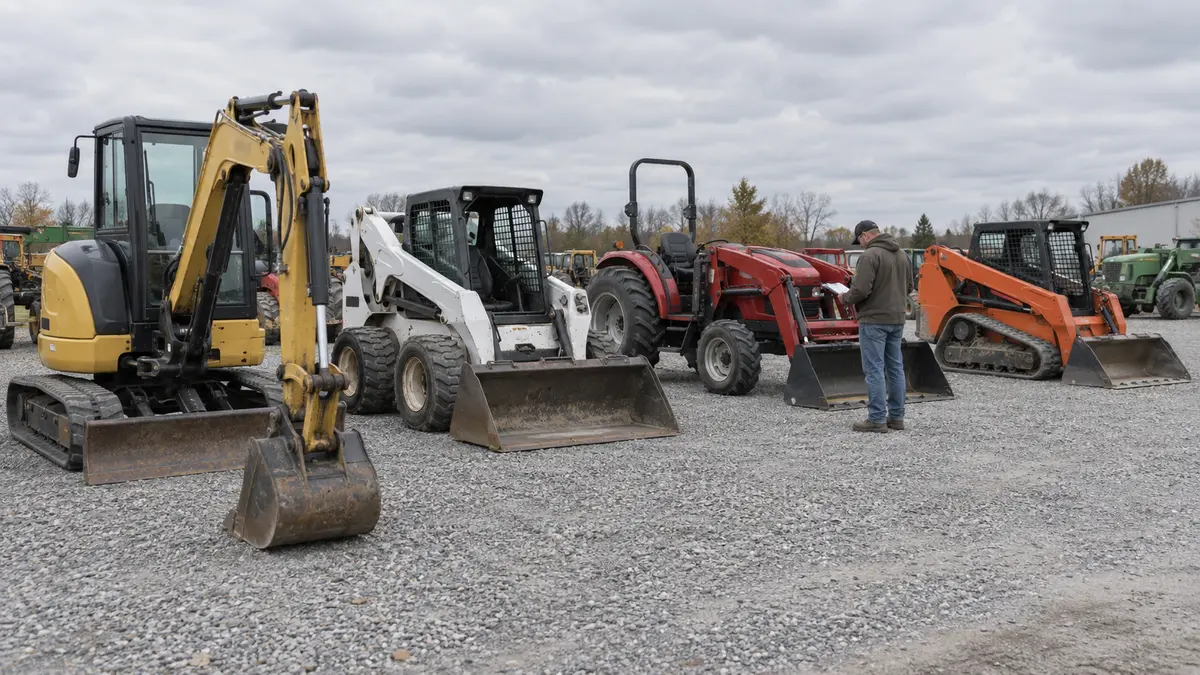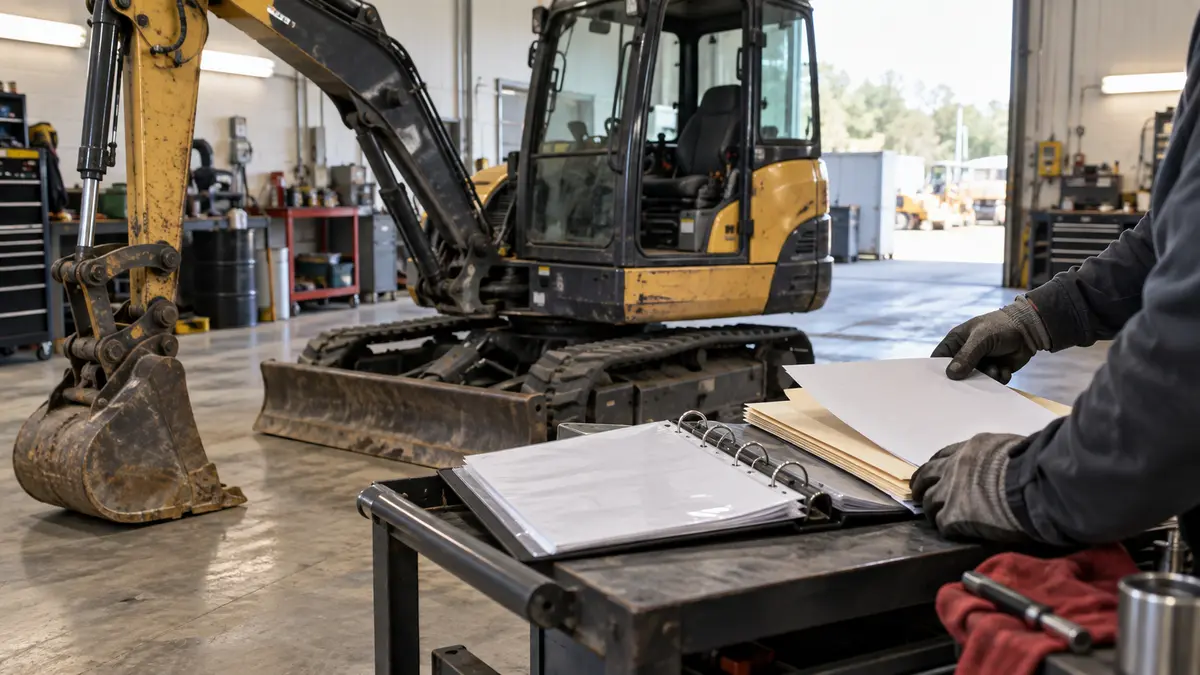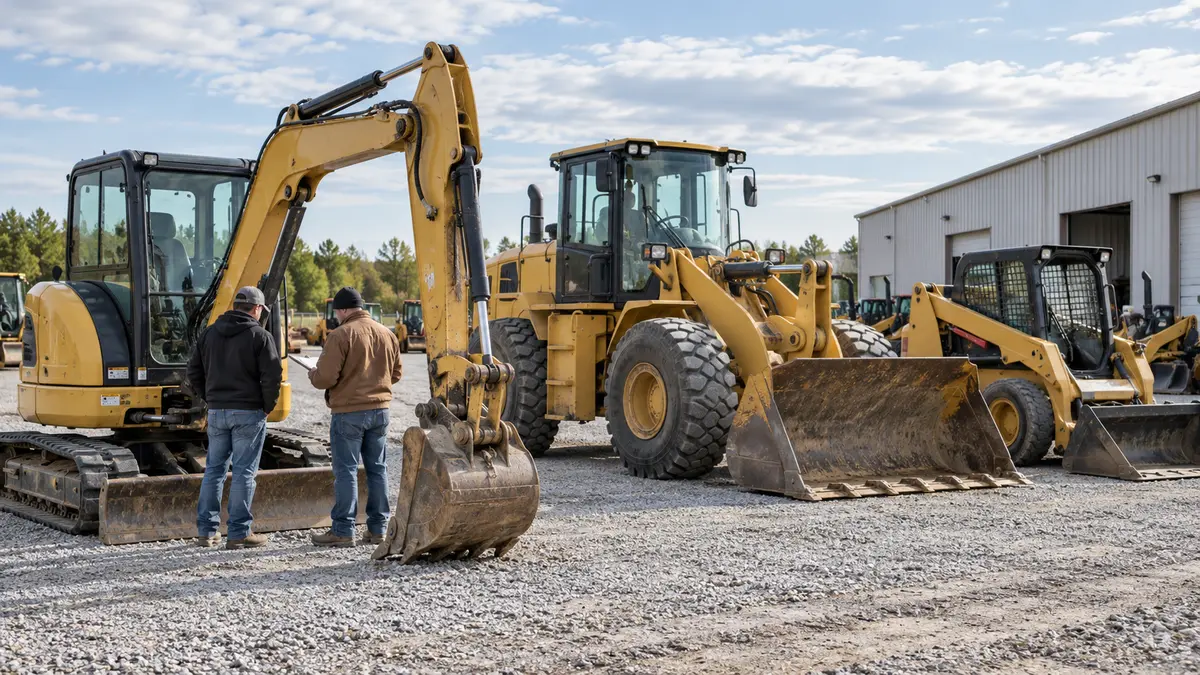
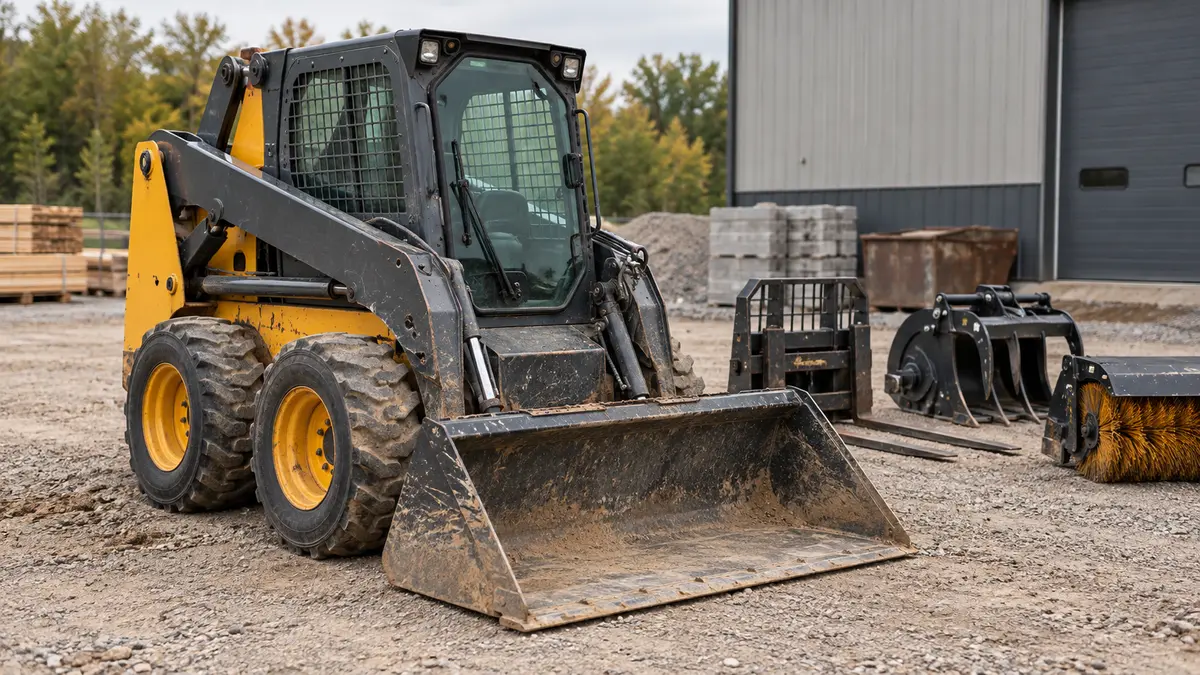
A used skid steer is a package of machine, attachments, condition and support. The lowest asking price can lose its appeal when the tool you need is missing, a configuration is wrong, or the first service appointment is weeks away.
Start by defining the jobs it must perform, then assess the individual loader. This guide focuses on wheeled skid steers. If you are still deciding between tires and tracks, read the skid steer versus compact track loader comparison first.
In This Guide
Build the Shortlist Around Your Regular Jobs
Write down what the loader will move, which attachments it will power, where it will work and how it will travel between sites. Keep occasional work separate from the tasks that justify ownership. A machine chosen for one rare application may add expense to every ordinary job.
Bobcat’s loader overview distinguishes wheeled skid steers suited to hard surfaces from compact track loaders used on softer ground. Treat that as an initial machine-type filter, then assess the actual surfaces and tasks in your operation. Bobcat: Compact Loader Types and Applications.
| Requirement | What to Specify | Question for the Supplier |
|---|---|---|
| Material handling | Loads, placement height and reach | Which documented rating applies to this exact setup? |
| Access | Entrance width, height and working space | Do fitted tires, cab and attachment fit the route? |
| Powered tools | Attachment make and model | Is this machine’s installed hydraulic/electrical setup compatible? |
| Travel | Site moves and collection route | What is the full transport weight and arrangement? |
| Support | Your working location and start date | Who can service this model and supply required parts? |
Verify Ratings and Configuration
Compare the same type of rating on both candidates. Do not substitute a tipping-load figure, an advertised maximum or a different model’s specification for the applicable operating limit. Ask a competent supplier to confirm the rating for the attachment and configuration you intend to use.
The manufacturer’s skid-steer selection page separates rated operating capacity, horsepower and lift path. Those are distinct pieces of the specification. A larger horsepower figure alone does not establish that the loader is the right material-handling choice. Bobcat: Skid-Steer Loaders.
Ask for the serial number and a configuration list before traveling. If a listing describes a desirable option, request evidence that it is installed on this machine. Save the answer with the listing so it can be checked during the inspection.
Check the Included Attachments in Writing
List each bucket, fork set and powered tool as a separate purchase item. Record identification and condition, and distinguish included equipment from props or optional extras shown in the photos. A replacement bucket or missing attachment can change your ready-to-work budget.
For powered tools, send both model identifiers to the supplier and request confirmation of the required machine configuration. Record any additional hoses, controls, electrical connections or protective equipment in the quotation. The question is whether the complete combination is approved and suitable, not whether the mounting faces look similar.
Make Safety Equipment Part of the Inspection
Have a qualified inspector assess restraints, interlocks and the other safety equipment appropriate to the model. NIOSH warns against bypassing safety devices and describes crushing hazards around lift arms and attachments. A seller’s claim that a defeated interlock is convenient should stop a demonstration, not reassure a buyer. NIOSH: Preventing Injuries and Deaths from Skid-Steer Loaders.
Use a trained operator for agreed demonstrations. Observe from a safe position, and do not climb into the loader by stepping on controls or approach moving lift equipment to inspect it. The manufacturer’s procedures and site controls govern the test.
Review Condition and History Together
Ask for service records and significant repair invoices. Link each document to the machine, then give the inspector the gaps and concerns before the appointment. An invoice showing one repaired system should not be treated as a report on the whole loader.
Our used skid steer inspection checklist turns the visit into a record of findings, exclusions and next actions. Ask for repair quotations that identify scope, labor, parts availability and whether additional diagnosis is needed.
Do not make the hour display your entire shortlist. Ask what the reading represents and whether replacement displays or missing periods affect confidence in the history. Let current findings and documented work influence the price you are prepared to consider.
Compare the Complete Package
| Cost Group | Include | Evidence |
|---|---|---|
| Acquisition | Machine, fees and applicable taxes | Written itemized quotation or sale terms |
| Preparation | Inspection, initial service and confirmed work | Inspector’s report and service quotations |
| Working package | Required attachments and installation | Compatibility confirmation and priced parts list |
| Logistics | Collection, delivery and loading needs | Transport quotation |
| Ownership | Operating costs, support and cash reserve | A common budget period for all candidates |
Use the total-cost guide to keep the comparison consistent. Give availability a place beside price: a loader awaiting essential work may not be able to support the first job you planned for it.
Make the Final Offer Conditional on Named Evidence
If a concern can be resolved, state exactly what you need: a professional diagnosis, a completed repair, confirmation of an option or clearer documentation. Avoid a vague request for the seller to “make it good.” Agree how completion will be demonstrated.
Before paying, verify the seller and payment instructions and make sure the agreement identifies the machine, included items, terms and collection arrangement. For ownership, lien or contract questions, obtain appropriate professional help. Keep a copy of the final package so the first weeks of ownership begin with a clear record.
Sources and Scope · Research checked September 18, 2026. U.S.-first buyer education. This is an editorial research guide, not a report on a machine we inspected. Equipment-specific procedures and limits belong in the correct manufacturer manual.
- Bobcat: Compact Loader Types and Applications
- Bobcat: Skid-Steer Loaders
- NIOSH: Preventing Injuries and Deaths from Skid-Steer Loaders
See our Editorial Policy and send a correction.