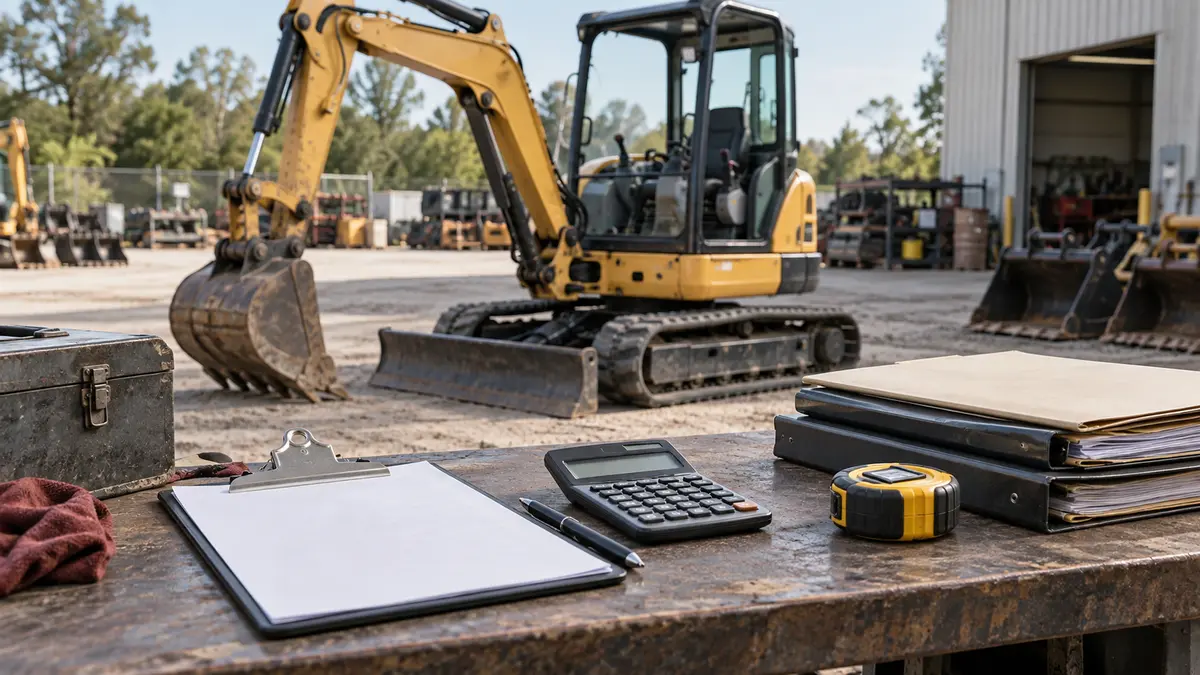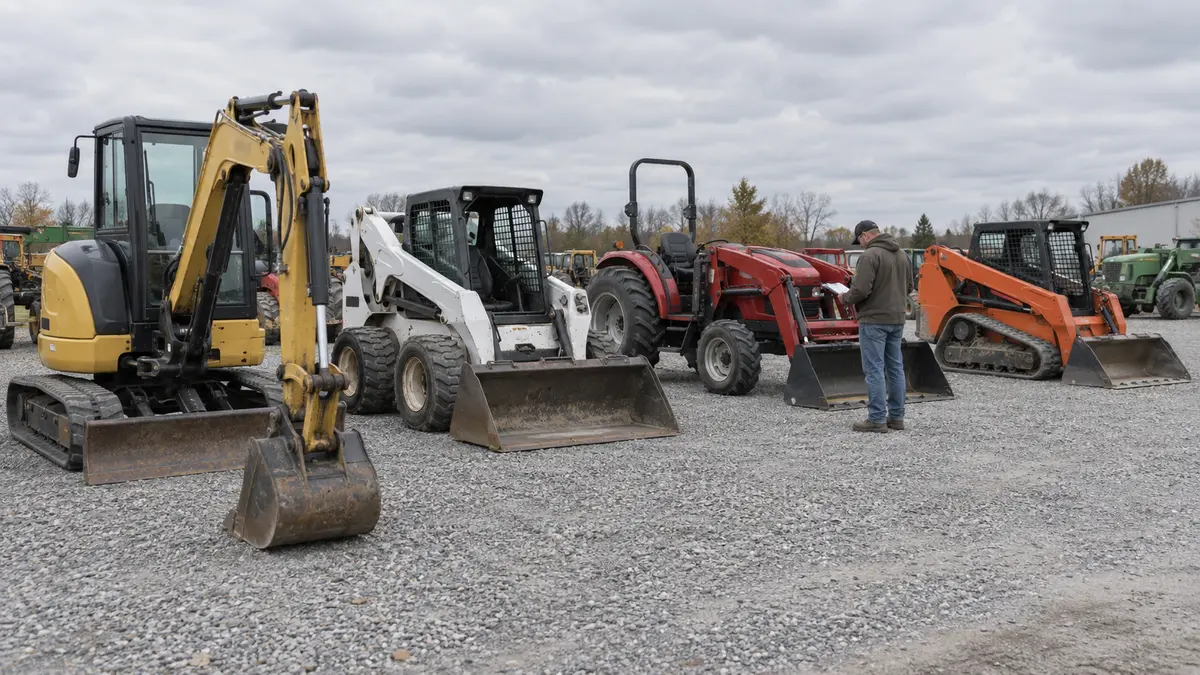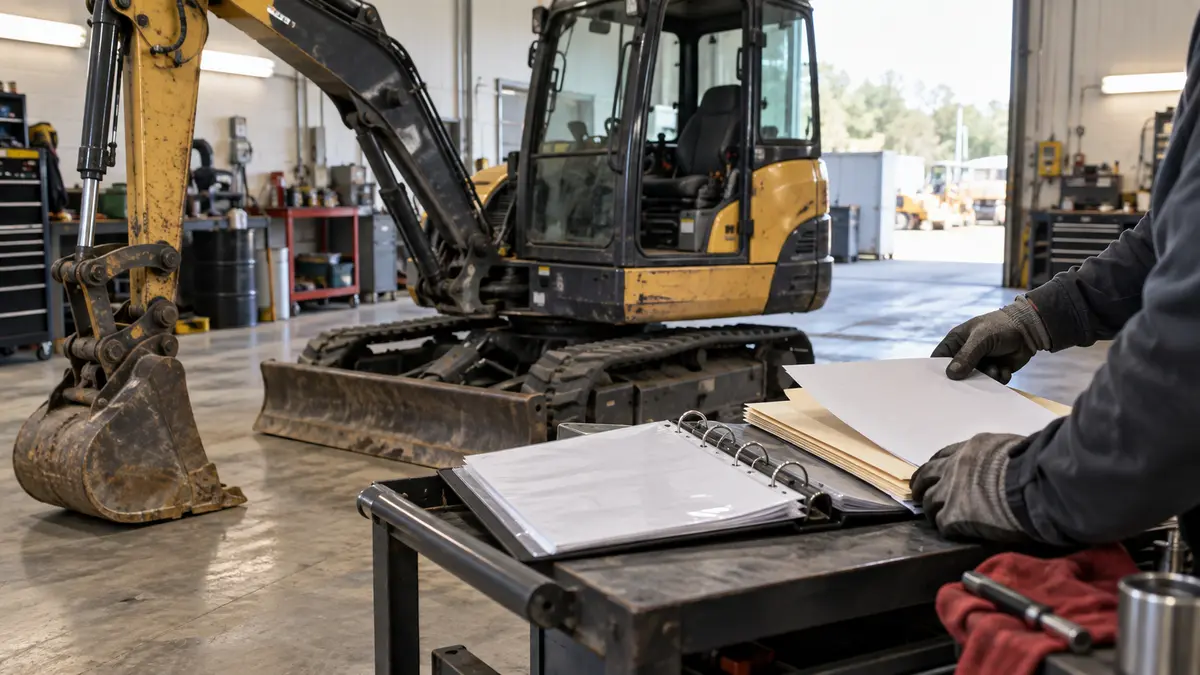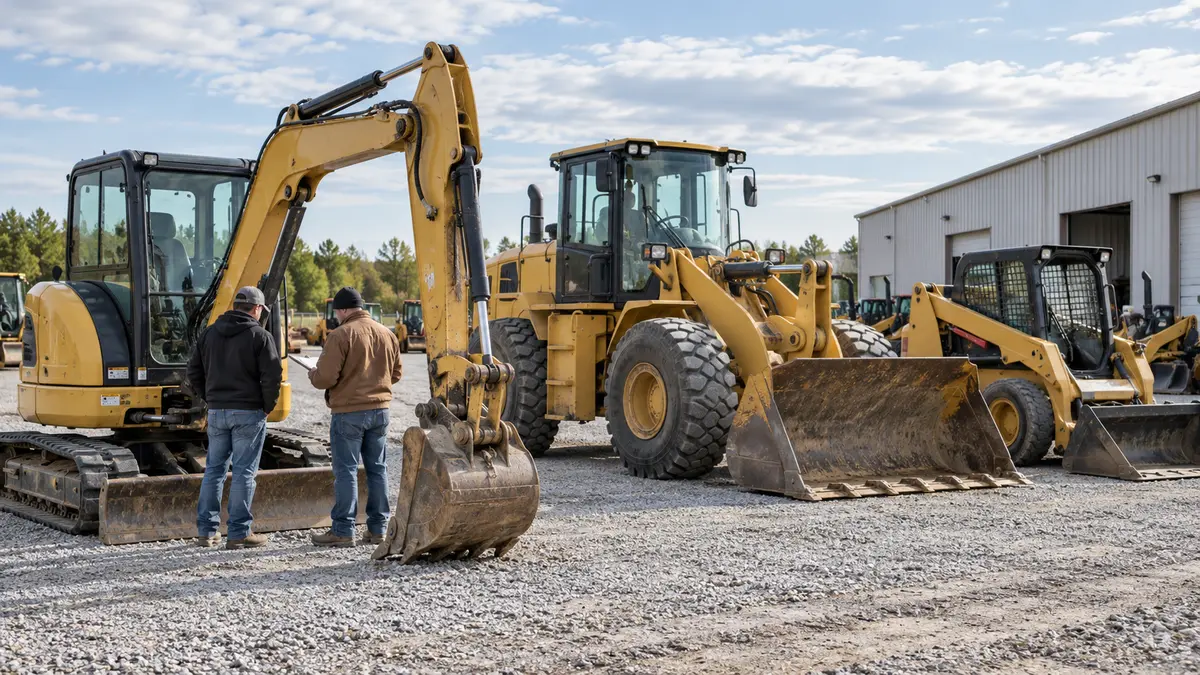
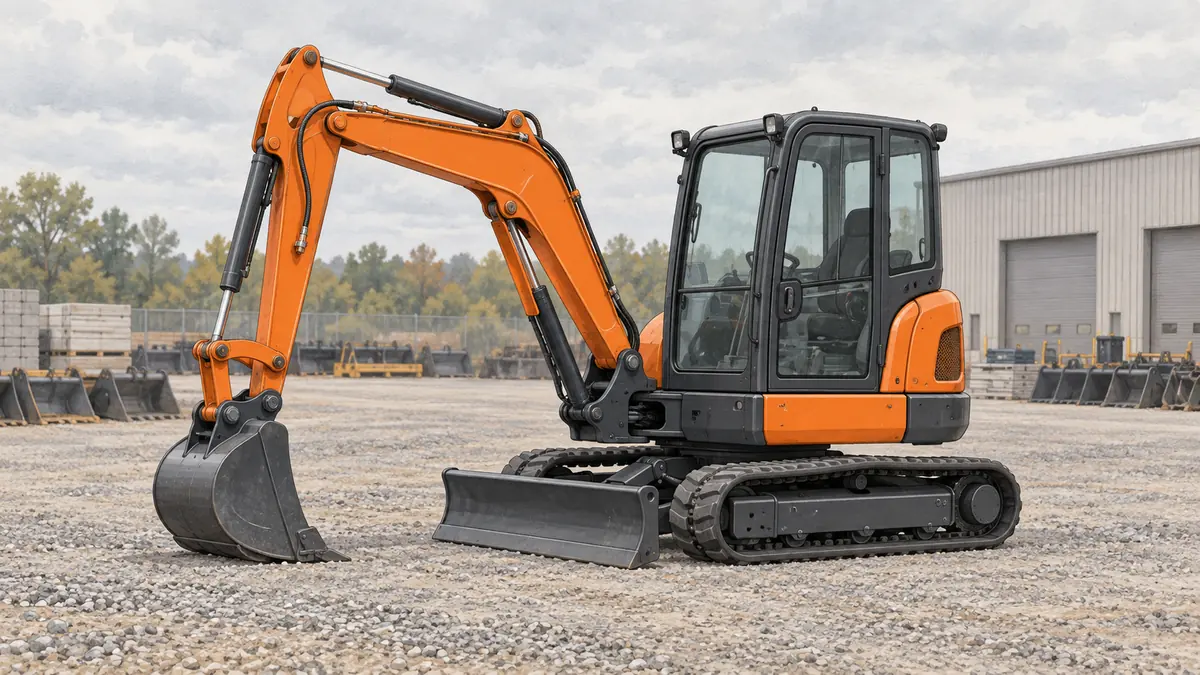
A used mini excavator can look like a bargain until it reaches the first gate it cannot pass through, needs an attachment its hydraulics cannot support, or waits for a repair you did not budget for. Start with the work you need to finish, then decide which individual machine deserves an inspection.
This guide gives a small contractor or property-services buyer a practical path from a job list to a documented purchase decision. The aim is to leave a viewing with evidence, open questions and a realistic cost estimate—not just a favorable impression.
In This Guide
- Write a Job Brief Before Comparing Listings
- Check Access and Working Space Separately
- Treat Attachments as Part of the Purchase
- Request the Evidence Before You Travel
- Commission an Inspection With a Written Scope
- Read Hours Alongside History and Condition
- Get the Machine-to-Work Cost
- Use Three Outcomes After the Viewing
- Questions Buyers Often Ask
Write a Job Brief Before Comparing Listings
Describe the jobs that would keep the machine busy over the next year. Separate frequent work from occasional tasks that could still be rented or subcontracted. A machine sized around an exceptional job may be awkward or costly on your everyday sites.
| Decision | Write Down | Evidence to Request |
|---|---|---|
| Access | Narrowest entrance and working area | Machine width, height and configuration-specific dimensions |
| Excavation | Required depth, reach and material | Specifications for the fitted arm and bucket |
| Handling | Objects and placement distances | Applicable lifting information and attachment limits |
| Attachments | Tools you must run | Manufacturer confirmation of machine/tool compatibility |
| Transport | How often and where it moves | Loaded dimensions, total load and a transport quote |
Bobcat’s selection guidance treats size, tail swing and arm configuration as separate choices. Use that distinction when reviewing used listings: two machines with similar model names may have different working envelopes. Bobcat: Choosing a Compact Excavator.
Check Access and Working Space Separately
Passing through an entrance does not establish that the machine can work beyond it. Record the space available for turning, digging, placing spoil and loading a vehicle. Photograph access restrictions and discuss them with an experienced operator before arranging a viewing.
Some compact excavators have retractable undercarriages; some use minimal or zero tail swing. Confirm which features the actual machine has and the manufacturer’s operating requirements. A compact tail does not remove the need for clearance around the boom, attachment and people. Bobcat: Compact Excavators in Small Spaces.
Ask the seller for the exact configuration rather than relying on a stock brochure photograph. A longer arm, extra counterweight, cab or different tracks can change the questions you need to resolve. Keep the serial number beside every specification you save so a document from another generation does not enter your comparison unnoticed.
Treat Attachments as Part of the Purchase
List each included bucket, coupler, thumb and powered attachment separately. Record its identification, condition and whether the seller owns it. A photograph of a tool next to the excavator does not establish that it is included in the price.
Before buying a powered tool, obtain written compatibility confirmation from the equipment or attachment supplier. Give them the machine serial number and attachment model. Ask what plumbing, controls, mounting hardware or changes are required, who will install them, and what the completed setup will cost. Avoid treating a seller’s “it should fit” as your specification check.
- Which tools are included in the written quotation?
- What additional parts or setup does my intended tool require?
- Can the seller demonstrate the exact included combination with an appropriate operator?
- Are the relevant instructions and parts support available for both machine and attachment?
Request the Evidence Before You Travel
Ask for current photographs, the serial plate, the hour display, service records and a written description of known faults. Request a list of significant repairs and the invoices behind them. Tell the seller that an independent inspection is part of your buying process; access restrictions matter before you spend money on travel.
Read the service-record guide to organize the documents into a timeline. Distinguish “the seller says it was serviced” from an invoice that identifies this machine and the work performed. Missing records do not tell you exactly what is wrong, but they leave more questions for the inspection and budget.
Compare asking prices only after matching the equipment and sale terms. An advertised price with no usable bucket, uncertain repairs and collection at a distant yard is not directly comparable with a ready-to-deliver package. Use the same cost categories for every candidate.
Commission an Inspection With a Written Scope
Agree what the inspector will assess, what can be demonstrated at the location and what will remain untested. Request photographs, observations, measurements where appropriate, and a clear separation between a confirmed defect and a suspected cause. Bobcat’s inspection outline spans structure, running gear, engine, hydraulic functions and safety equipment; a paint check alone is a much narrower exercise. Bobcat: Machine Inspection.
Use our excavator inspection checklist as a conversation and evidence sheet. Ask the professional to explain any significant finding in terms you can use: what is known, what further diagnosis is needed, whether operation should stop, and who can quote the work.
A short demonstration may leave important systems untested. Put those limits in the report. “Not tested” is an unresolved item, not an acceptable result. If the seller cannot provide suitable access, decide whether you can afford that uncertainty before bidding or paying a deposit.
Read Hours Alongside History and Condition
The number on the display is a starting point for questions. Ask whether the meter or display has been replaced and how the reading relates to dated service documents. A repaired engine does not make the rest of the machine new, and a low reading does not explain years of storage.
For each shortlisted machine, make three columns: recorded use, documented work and current findings. Where the columns disagree, ask for evidence. Our used excavator hours guide explains how to do this without relying on a universal hour cutoff.
Get the Machine-to-Work Cost
Build a written budget that includes the purchase, transaction charges, applicable taxes, inspection, collection, initial service, confirmed repairs and required tools. Keep an additional cash reserve distinct from expenses you already know about. Get quotes before negotiating so your offer has a reason behind it.
Confirm the transport arrangement using the actual load and the towing/transport equipment ratings. Include attachments and any loading constraints. Bobcat’s transport guidance emphasizes matching the transport vehicle to the equipment and following the machine’s manual and applicable route requirements. Bobcat: Transporting a Compact Excavator.
Ask your service provider about availability as well as price. A repair that is affordable but cannot be scheduled before your first job may still make the purchase unsuitable. The ownership-cost worksheet helps compare the candidates over the same period.
Use Three Outcomes After the Viewing
| Outcome | When It Fits | Next Action |
|---|---|---|
| Continue | Job fit is supported and major questions are answered | Confirm the complete written price and closing documents |
| Pause | A repair, identification issue or test remains unresolved | Name the evidence needed and a deadline for obtaining it |
| Pass | Fit is wrong or uncertainty exceeds your budget | Keep the notes and move to the next candidate |
Before committing, make the written agreement identify the machine, included attachments, promised work, collection arrangements and any warranty terms. Verify the seller and payment instructions independently. If ownership or contractual questions remain, use an appropriate professional to resolve them rather than treating a serial-number photograph as proof of a clean sale.
Keep the job brief, report, quotations and correspondence together. A good purchase file records why you accepted the machine and which follow-up work you budgeted. It becomes the starting point for your ownership records.
Questions Buyers Often Ask
Should I choose the smallest machine that can do the job? Compare the full routine workload, access and transport requirements. A borderline specification may be inconvenient on repeated jobs; an oversized machine may be difficult to move or use. Have a competent operator assess the proposed fit.
Is buying from a dealer enough to skip inspection? Ask exactly what was inspected, when, and what the sales contract covers. Use the same evidence standard for every seller type. See the seller-channel comparison.
Can I decide from photos and a video? They can help eliminate unsuitable candidates. They cannot resolve everything a physical inspection and appropriately scoped demonstration would assess.
Sources and Scope · Research checked September 18, 2026. U.S.-first buyer education. This is an editorial research guide, not a report on a machine we inspected. Equipment-specific procedures and limits belong in the correct manufacturer manual.
- Bobcat: Choosing a Compact Excavator
- Bobcat: Compact Excavators in Small Spaces
- Bobcat: Machine Inspection
- Bobcat: Transporting a Compact Excavator
See our Editorial Policy and send a correction.