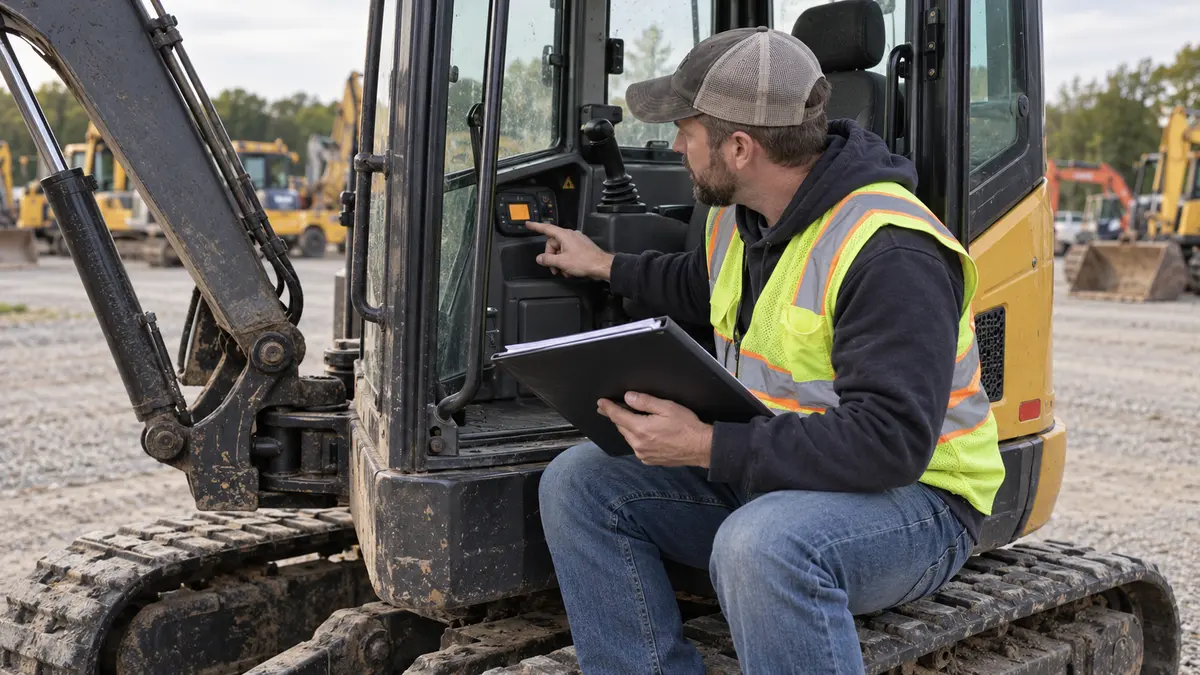
There is no useful purchase verdict in an hour reading alone. A meter can tell you something about recorded use; it does not tell you everything about the work performed, maintenance quality, repairs or the condition you are buying today.
Instead of looking for a universal “too many hours” cutoff, use the number to organize a set of questions. The result should be a clearer inspection brief and cost comparison, not a prediction that an excavator has a fixed amount of life remaining.
In This Guide
Establish What the Reading Represents
Photograph the current display and record the date, model and serial number. Ask whether the display or meter has ever been replaced, whether the reading is represented as total machine hours, and what records support that statement. Keep the seller’s explanation in writing.
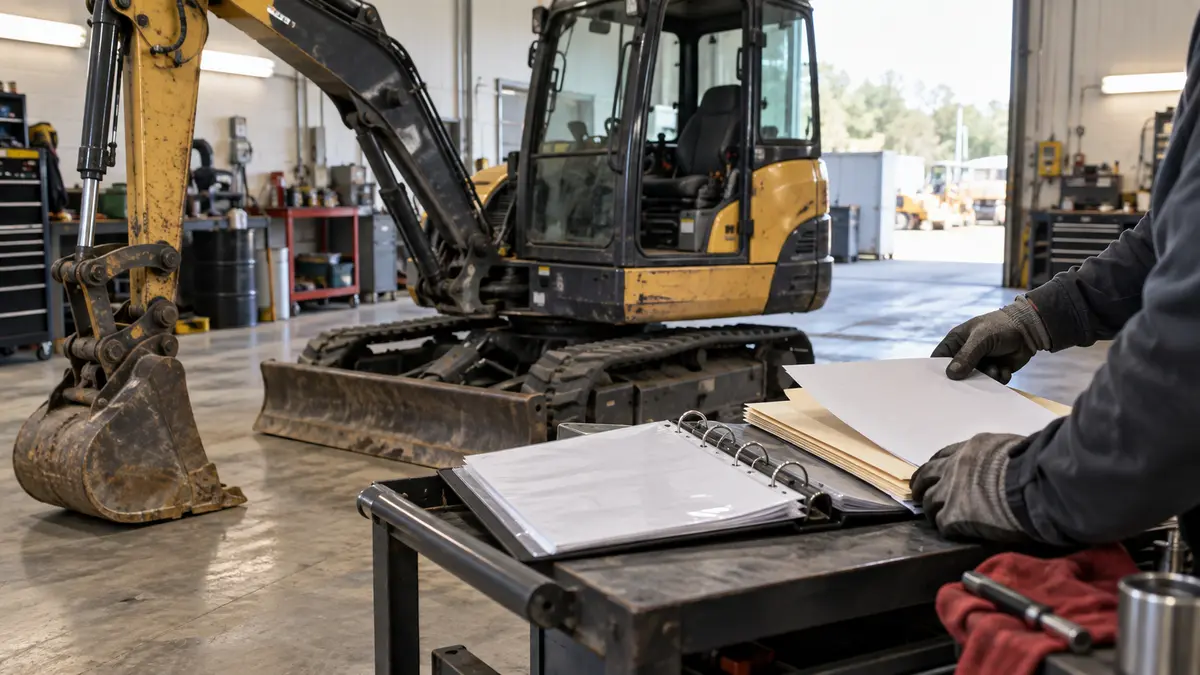
Build a short timeline from dated service invoices and other identifiable records. A replacement meter is a reason to clarify the history, not automatic evidence of dishonesty. If the documents cannot reconcile the readings, label total hours as unverified in your comparison.
| Question | Evidence to Seek | What Remains Uncertain |
|---|---|---|
| Is it the original display? | Replacement invoice or service entry | Earlier use if no continuity record exists |
| Does the timeline make sense? | Dated records tied to the serial number | Unexplained changes or long gaps |
| What work did it perform? | Application history and relevant invoices | Severity and operating habits not documented |
| What has been repaired? | Itemized component work orders | Condition of components outside that work |
Describe Previous Use Without Assuming the Outcome
Ask for the machine’s principal tasks, typical site conditions, attachments used and periods of storage. A label such as “rental,” “landscaping” or “demolition” is not a condition report. Use it to tell the inspector where the history is detailed and where it is vague.
For example, a seller may describe frequent attachment work but provide only engine-service invoices. That does not establish a hydraulic defect. It identifies a gap: your inspection brief should ask what evidence is available for the systems relevant to that work.
Likewise, a low-use machine with a long idle period needs a storage and return-to-service history. Ask when it last worked regularly and what was done before the current sale. Avoid adding a made-up “equivalent hours” multiplier to compensate for unknown use.
Keep Component History Separate From Machine Hours
A machine contains systems with different histories. Record the date and meter reading of documented major work, the exact scope, who performed it and what warranty—if any—can be confirmed. Do not translate “engine work” into “new engine” or “new machine.”
A seller’s verbal statement that something was rebuilt may refer to very different levels of work. Ask for the invoice and parts list. Where the answer remains unclear, the inspector should describe the condition that can actually be assessed rather than awarding an assumed life extension.
Use Condition Evidence to Improve the Question
Ask the inspector which current findings are likely to affect near-term reliability, operating suitability or cost. The useful question is often “What do I need to resolve before using this machine for my planned work?” rather than “How many more hours will it last?”
Historical fluid-analysis reports can add another evidence stream when they identify the machine and sampling context. Bobcat describes analysis as a way to monitor fluid condition and contamination and compare historical data. A report still needs professional interpretation alongside the inspection. Bobcat: Fluid Analysis.
One favorable result should not erase contradictory records or a current symptom. Ask how the sample was obtained, what was known about the fluid and what follow-up the laboratory or service provider recommended. Do not promise a remaining service life from a single laboratory report.
Compare Two Machines Using the Same Evidence
| Candidate | What You Know | What to Do Next |
|---|---|---|
| Lower displayed hours | Sparse records and an unresolved operating concern | Investigate the concern and verify the history |
| Higher displayed hours | Detailed records and a documented recent inspection | Review findings, upcoming work and price on their merits |
Neither row is an automatic winner. The point of the example is to prevent the display from deciding the purchase before the evidence is reviewed. Complete a common budget for transport, initial work and ownership, then compare machines that fit the same job.
Set Your Own Purchase Conditions
- The machine fits the intended work in its actual configuration.
- The history is sufficiently clear for the price and uncertainty you accept.
- A qualified inspection has addressed the important condition questions.
- Known work and unresolved items are visible in the budget.
- The seller’s written terms match the machine and package offered.
If one of those conditions fails, more research on an average hour threshold will not repair the gap. Request the missing evidence, reconsider the offer or continue searching. Use the excavator checklist and service-record review to make that next step specific.
Sources and Scope · Research checked September 18, 2026. U.S.-first buyer education. This is an editorial research guide, not a report on a machine we inspected. Equipment-specific procedures and limits belong in the correct manufacturer manual.
See our Editorial Policy and send a correction.